|
|
|

THE POETICS OF LONELINESS IN ANA PANTIC’S NOVEL  | Branka Selaković | |
| |
The Poetics of Loneliness in Ana Pantić’s Novel
By Branka Selaković
Translated by Ilija Šaula
with assistance from Copilot
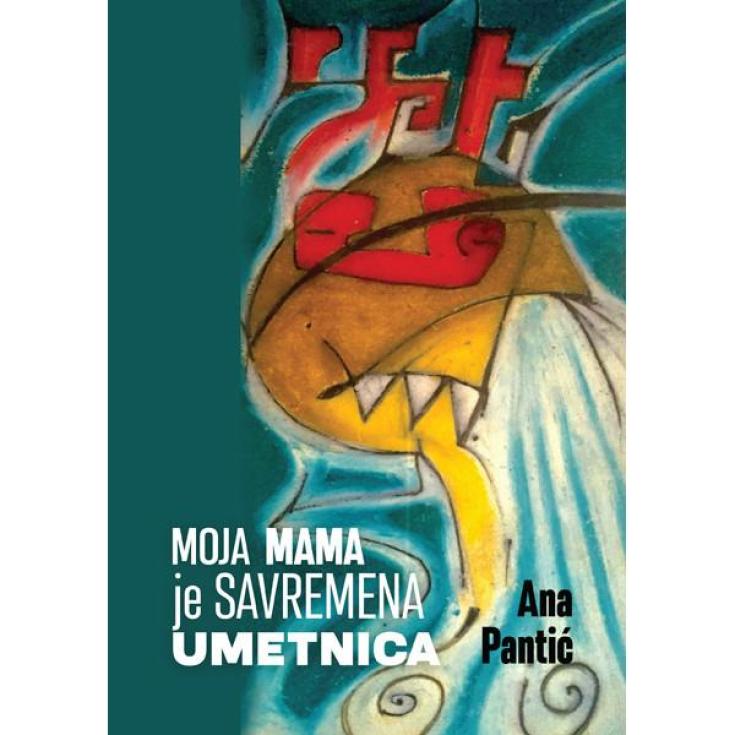
Recently, I saw Loneliness, a painting by Salvador Dalí from 1931. It depicts a woman from behind, leaning against a rock, her forehead resting on the back of her hand. She seems as though she were carved from stone, and yet there is an unmistakable sense that she is alive. The sunlight and the shades of water shape her emotion, making both her and the scene inspiring and dignified. It is no wonder that many people wish to own a reproduction of this work, as prints can be purchased for just a few dollars. Dalí’s mesmerizing piece reminded me of the loneliness portrayed by Ana Pantić in her debut novel My Mom Is a Contemporary Artist (Orion Art Books, 2025).
There are quiet and loud forms of loneliness, those we carry hidden and suppressed, barely showing signs of life, and those that are loud, dominant, and capable of breaking both the individual and their surroundings. The author nuances both kinds through the everyday dynamics of the relationship between a mother and her eight-year-old daughter. Within the complexity of this fundamentally nurturing and permeated by love, there is also resistance and anger. Their need to understand and liberate one another through a challenging process of growth is further complicated by social norms. Both try to step outside established frames and outgrow their own traumas and uncertainties. In that process, no matter how surrounded they may be by others, they remain alone.
Speaking through her young heroine, who serves as the story’s narrator, Ana Pantić draws attention to the path children traverse in the complex process of growing up, as they absorb relational dynamics and strive to understand reality. This path becomes particularly challenging during family separation and the introduction of new figures into what was once a rhythmic, stable world. Children perceive and interpret every fluctuation within the family according to their capacities. Often, roles are reversed in such moments, and they become parents to their own parents. Thus, the heroine easily recognizes when her mother is crying, how deeply something hurts her, how her father’s new wife positions her, and even cowardice, while simultaneously grappling with her own maturation and the inevitable onset of physical change. The girl becomes the central cog in the mechanism of all the characters who appear within the family, indeed within the very idea of the family’s existence.
This novel offers valuable insight into the world of a person growing up in a specific environment—not only because the parents are separated, but because the child is drawn into the intimate world of a mother-artist who seeks emotional healing through the creative process. In doing so, the child becomes a transparent part of a publicly exposed project. This is one of the novel’s layers that invites extensive discussion. The central dilemma is whether children should participate in the emotional breakdowns and ascents of their parents while also bearing their own burdens. The weight on their shoulders is often more unwieldy than that carried by the partners themselves. Traumatic experiences in which they are both observers and participants, peer relationships, hormonal transitions, transgenerational trauma, and a multitude of daily uncertainties are just some of the battles young people face.
The novel’s title, My Mom Is a Contemporary Artist, may serve as a universal argument for the heroine as she attempts to build her identity outside the framework of her mother, but also as a mode of functioning or self-defense for several characters: My daughter is a contemporary artist. My ex-wife is a contemporary artist. Her mom is a contemporary artist…
The conceptual, contemporary artist-mother appears, in her endeavor, ecstatically vulnerable and deeply relatable. Her love is vast and powerful; the child understands this while being part of the process, perhaps even the essential adhesive through which the mother heals. They need each other, yet at times even that need becomes a burden. By tracing a female lineage–grandmother, mother, granddaughter–that can in essence be (and is) One, the novel portrays the strength they carry within themselves, a strength that transcends all adversity. In doing so, the author reveals simultaneous power and fragility, depending on role and moment.
The language Ana Pantić employs aligns with the age of the girl through whom she speaks, yet this does not render the novel childish or intended solely for teenagers. On the contrary, it is for all those who have deeply stored their own vulnerable moments. It is also a keyhole for parents, allowing them to glimpse into the world of their children–to recall youthful modes of communication, fears, and the burden of isolation, a loneliness that emerges yet does not overwhelm.
*This text was originally published in the culture, arts, and science supplement of the daily newspaperPolitika.
|